


Close
- Contains fish
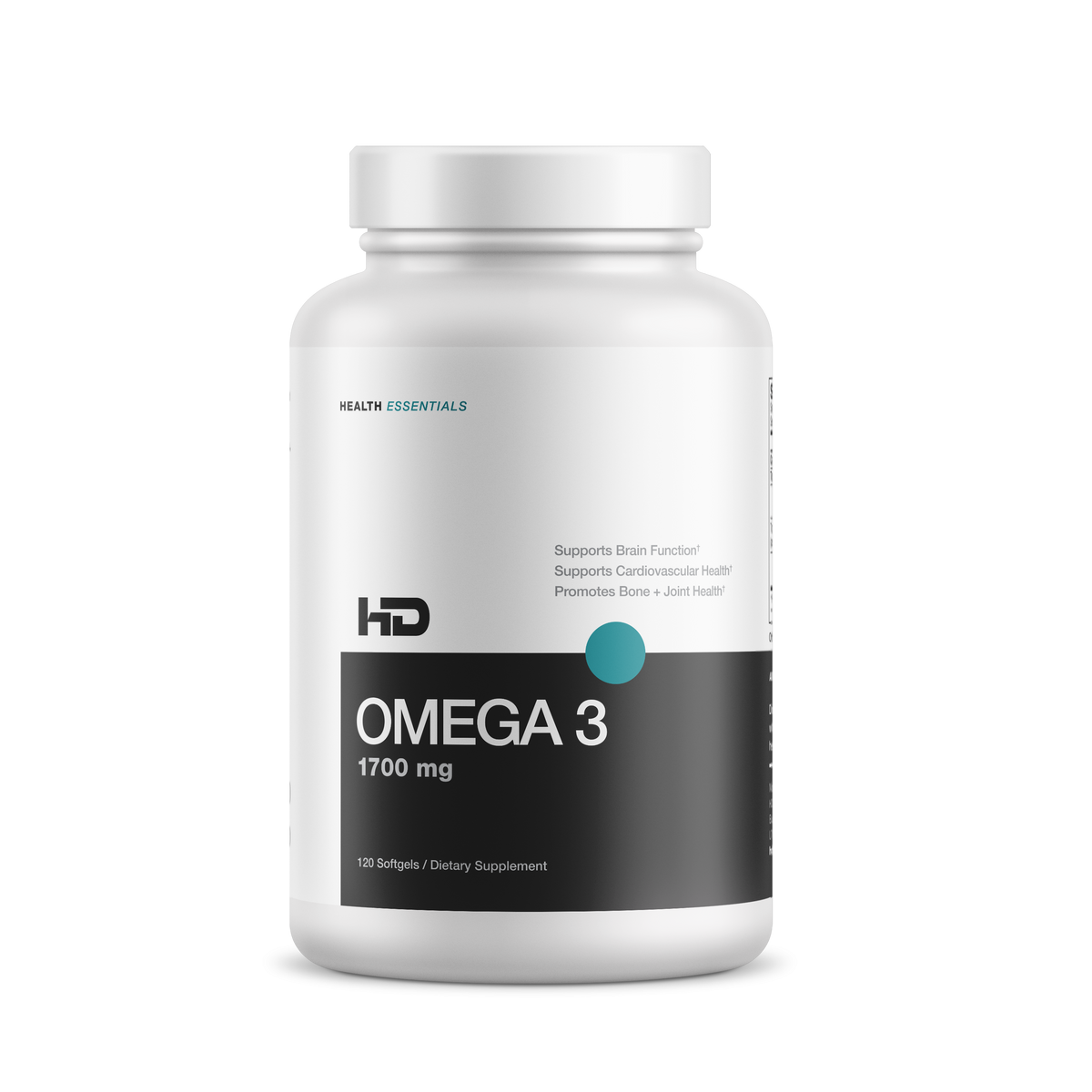
Omega 3
1,400 mg of EPA and DHA. In the form that absorbs.
- Recovery
- Heart and brain
- Daily foundation
- Registered trademark ingredients
- Properly dosed ingredients
- Non-proprietary formulas
- No artificial colors or dyes
- Tested for heavy metals
Health Canada licensed NPN 80130418
“Can't find a similar dosage out there. All HD products I've tried are amazing”

What is inside.
What it does, what is in it, and when to take it.
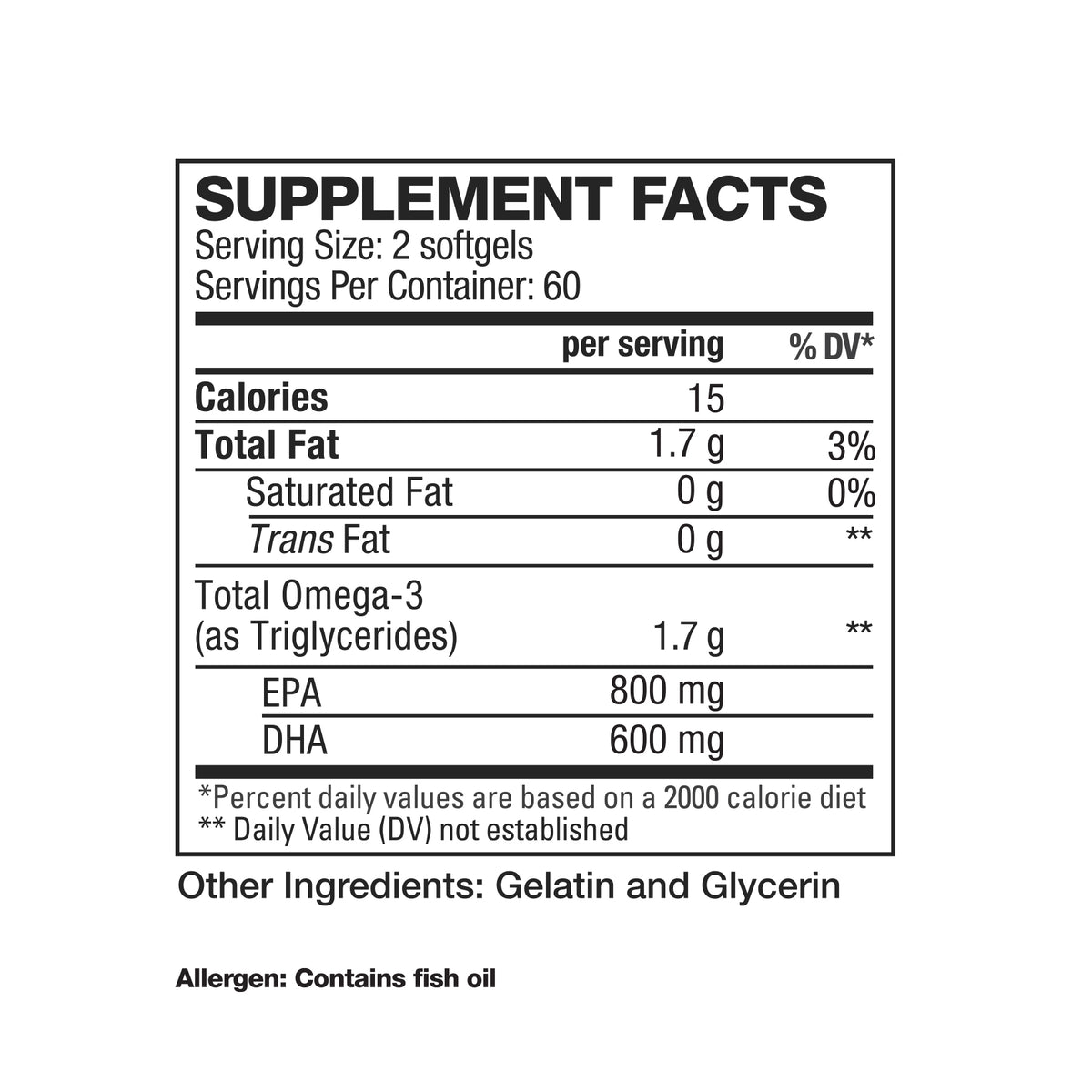
1,400 mg EPA and DHA
Triglyceride form
Over 80% actives
No fishy repeat
Total Omega-3 (as Triglycerides)
1.7 GEPA
800 MGDHA
600 MGSupplement facts
Take two softgels with food, one to three times a day.
Take it with a meal containing some fat — omega-3 is fat-soluble and absorbs better alongside food.
Take it consistently. Omega-3 status builds over months rather than days.
Transparency
Know what you are taking.
Omega-3 is one of the few supplements almost everyone genuinely benefits from, and one of the easiest to buy badly. The number on the front of most bottles is the weight of the oil, not the weight of the omega-3 in it — and those are usually very different figures.
Two softgels deliver 800 mg of EPA and 600 mg of DHA. Total fat in that serving is 1.7 g, and total omega-3 is also 1.7 g. There is essentially nothing in the softgel that is not the thing you came for. A standard fish oil is closer to 30% omega-3, which is why it takes a handful of capsules to reach the same place.
Omega-3 occurs naturally as triglycerides. Concentrating fish oil usually converts it to ethyl esters, because that route is cheaper — and ethyl esters are absorbed less readily than the natural form. This oil is concentrated and then returned to the triglyceride form. It is the single most expensive decision in a fish oil and the one almost never mentioned on a label.
EPA is the omega-3 most associated with inflammatory balance and recovery from hard training. DHA is structural — it is a building block of brain and retinal tissue. Both matter, and the ratio here favours EPA slightly, which suits an audience training hard and recovering often.
The aftertaste people associate with fish oil comes from oxidation and from low-concentration oil, not from omega-3 itself. A concentrated, fresh oil in the triglyceride form does not do it, which is what customers report here more consistently than anything else.
Omega 3 is concentrated from fish oil and the softgel is gelatin. It is not suitable for anyone with a fish allergy, or for vegetarians and vegans.

† These statements have not been evaluated by the Food and Drug Administration. This product is not intended to diagnose, treat, cure or prevent any disease.

Real results.
More strength. More power. A stronger you.
“Best Omega 3 I have had! Other brands can have bad aftertaste”
- IFIan F.Verified BuyerReviewingOmega 3I recommend this productRated 5 out of 5 stars21 seconds agoLove them
Excellent quality
- CGCheryl G.Verified BuyerReviewingOmega 3I recommend this productRated 5 out of 5 stars2 months agoAnother great HD product
Can’t find a similar dosage out there. All HD products I’ve tried are amazing and that’s why I’m a repeat customer along with referring others
- KPKhrystel P.Verified BuyerReviewingOmega 3I recommend this productRated 5 out of 5 stars4 months agoNice
Perfect amounts
- ZGZachry G.ReviewingOmega 3I recommend this productRated 5 out of 5 stars1 year agoGreat turn around time
I order my health products online all the time, and I have to say HD muscle gets it turned around and ship to me the fastest in any other. The quality of their products are next to none.
- CDChristine D.ReviewingOmega 3I recommend this productRated 5 out of 5 stars2 years agoLuv it
This product does not taste fishy, I have more energy than other Omegas have ever provided.