


Close
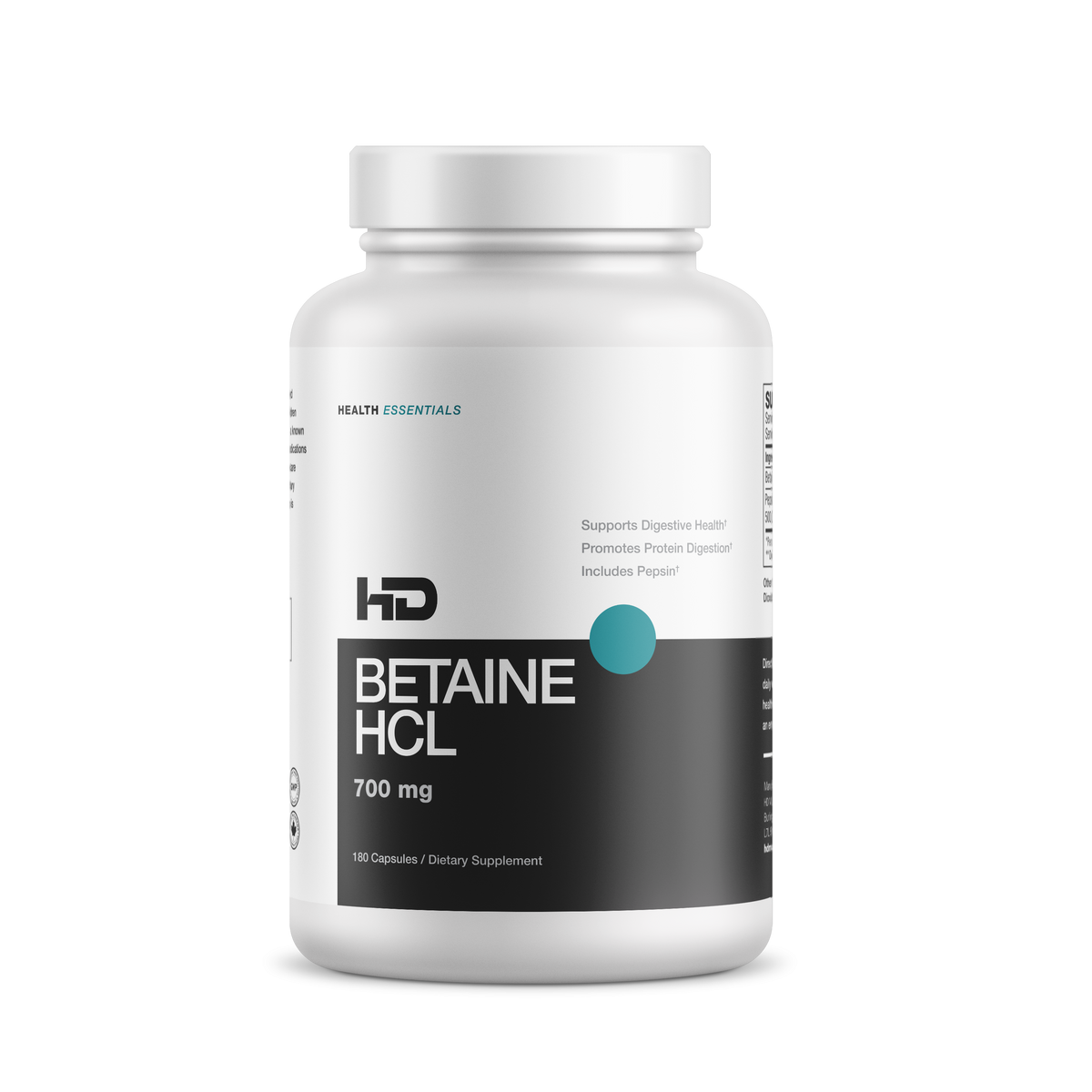
Betaine HCL
Betaine HCL with pepsin, for big protein meals.
- Protein digestion
- Bloating
- High-protein diets
- Registered trademark ingredients
- Properly dosed ingredients
- Non-proprietary formulas
- No artificial colors or dyes
- Tested for heavy metals
Health Canada licensed NPN 80127639
“Definitely helps with the bloat”

What is inside.
What it does, what is in it, and when to take it.
Built for protein meals
Acid plus enzyme
Nutrient absorption
Taken with food, not daily
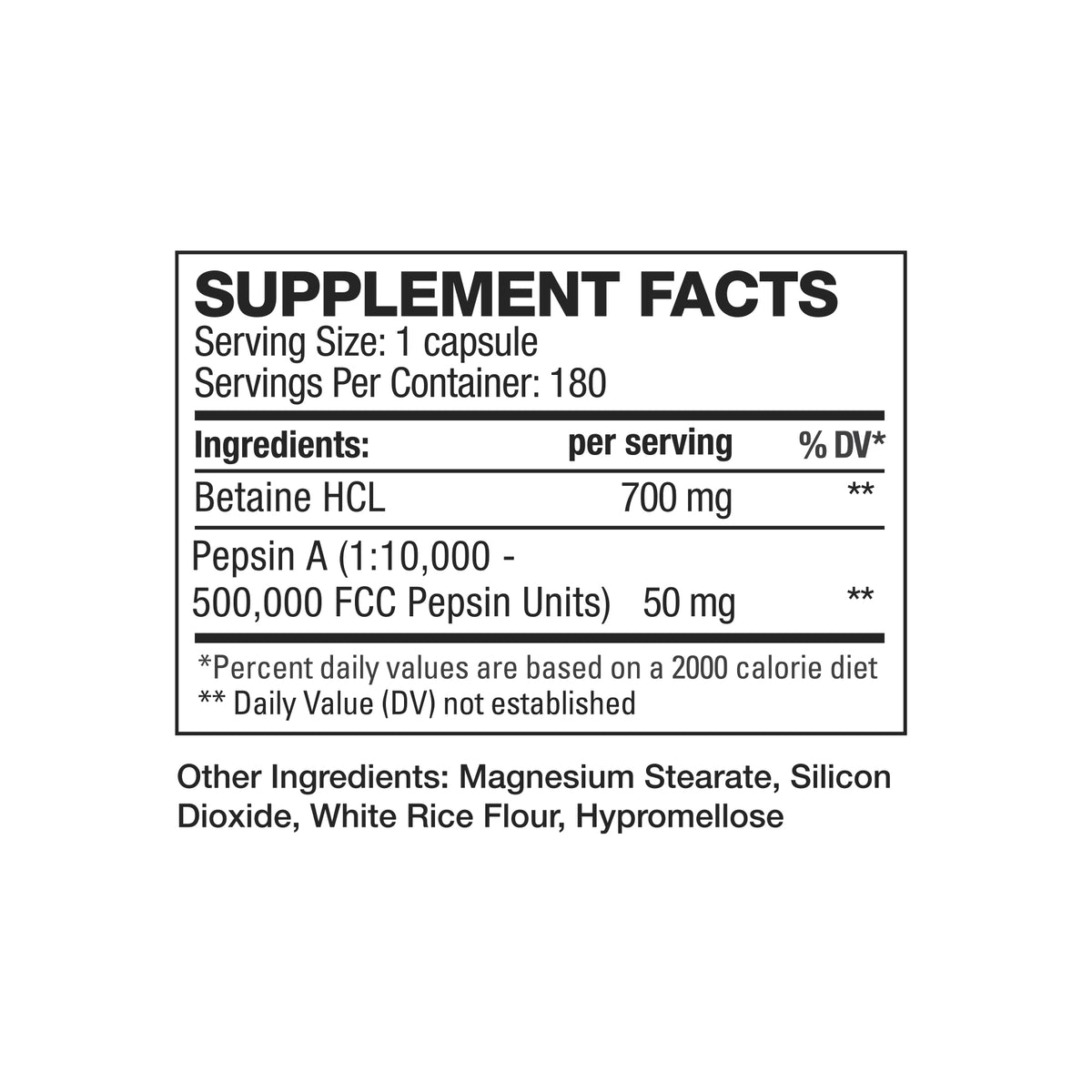
Betaine HCL
700 MGPepsin A
50 MGSupplement facts
Take one capsule with a high-protein meal, up to three times a day.
Do not take it on an empty stomach. This is taken with food, not on a schedule.
Do not take it if you have or have had an ulcer, gastritis or reflux, or if you take NSAIDs, corticosteroids or any acid-reducing medication, without speaking to your doctor first.
Transparency
Know what you are taking.
Everyone in this sport counts protein going in. Almost nobody thinks about the part where it has to be broken down and absorbed. High protein diets require high stomach acid and sufficient pepsin — a proteolytic enzyme — to digest and assimilate protein fully and rapidly, and a diet built around 200 grams a day asks considerably more of both than a normal one does.
Low stomach acid is more common than most people assume, and it is rarely something you would connect to digestion at all. It can result from:
- Stress
- H. pylori infection
- Long-term use of antacids and proton pump inhibitors
- Poor gut health and dysbiosis
- Aging
None of those announce themselves. What you notice instead is feeling heavy after a big meal, or bloated on a diet you are otherwise handling well.
HD Muscle Betaine HCL is a highly bioavailable source of hydrochloric acid. Gastric juice needs that acidity to chemically break food down, protein most of all — and gastric acid does a second job on top of it, promoting the formation and activation of pepsin, the key enzyme for protein digestion. Supplying pepsin without the acidity it depends on is half a solution. Each capsule carries 700 mg of Betaine HCL and 50 mg of Pepsin A (1:10,000 — 500,000 FCC Pepsin Units).
Optimal gastric acidity is also what allows calcium, vitamin B12 and iron to be absorbed from food. It is the step before everything else, which is why it tends to be the quiet limiter rather than the obvious one — and why a stack built on protein, minerals and a multivitamin can still underdeliver if this part is not working.
One capsule with a high protein meal, up to three times a day. Do not take it on an empty stomach. Because this product supplies hydrochloric acid, it is not suitable for everyone: avoid it if you have an ulcer, gastritis or reflux, or a history of any of them, if you have a current H. pylori infection, or if you take NSAIDs, corticosteroids, or an acid-reducing medication such as a proton pump inhibitor or H2 blocker. If any of that applies to you, speak to your doctor before taking it.

† These statements have not been evaluated by the Food and Drug Administration. This product is not intended to diagnose, treat, cure or prevent any disease.
Better together
Complete your routine.
Save time. Get the essentials.
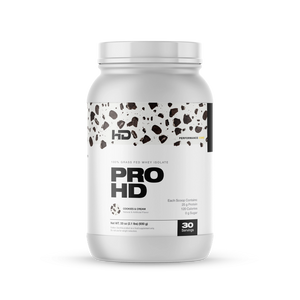
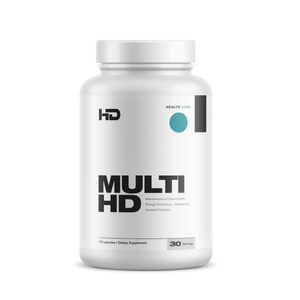
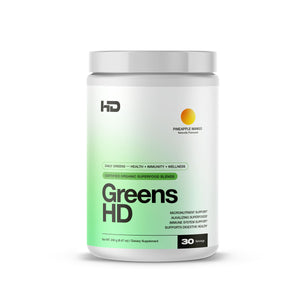

Real results.
More strength. More power. A stronger you.
“Seems to be helping with all the protein I have to eat.”
- JRJordan R.ReviewingBetaine HCLI recommend this productRated 5 out of 5 stars9 months agoDigestion help
So far so good!
- PLPaul L.ReviewingBetaine HCLI recommend this productRated 5 out of 5 stars1 year agoHD MUSCLE has the best products
Since I took GlycoHD and Betaine HCL I noticed a big improvement in my physique. Highly recommended! THANK YOU HD MUSCLE!!!
- FMFaradzh M.ReviewingBetaine HCLI recommend this productRated 5 out of 5 stars1 year agoSupplements
Great supplements!
- JCJosiah C.ReviewingBetaine HCLI recommend this productRated 5 out of 5 stars2 years agoDefinitely helps with the bloat
Definitely helps with the bloat
- ASAngela S.ReviewingBetaine HCLI recommend this productRated 5 out of 5 stars2 years agoSeems to be helping with
Seems to be helping with all the protein I have to eat.